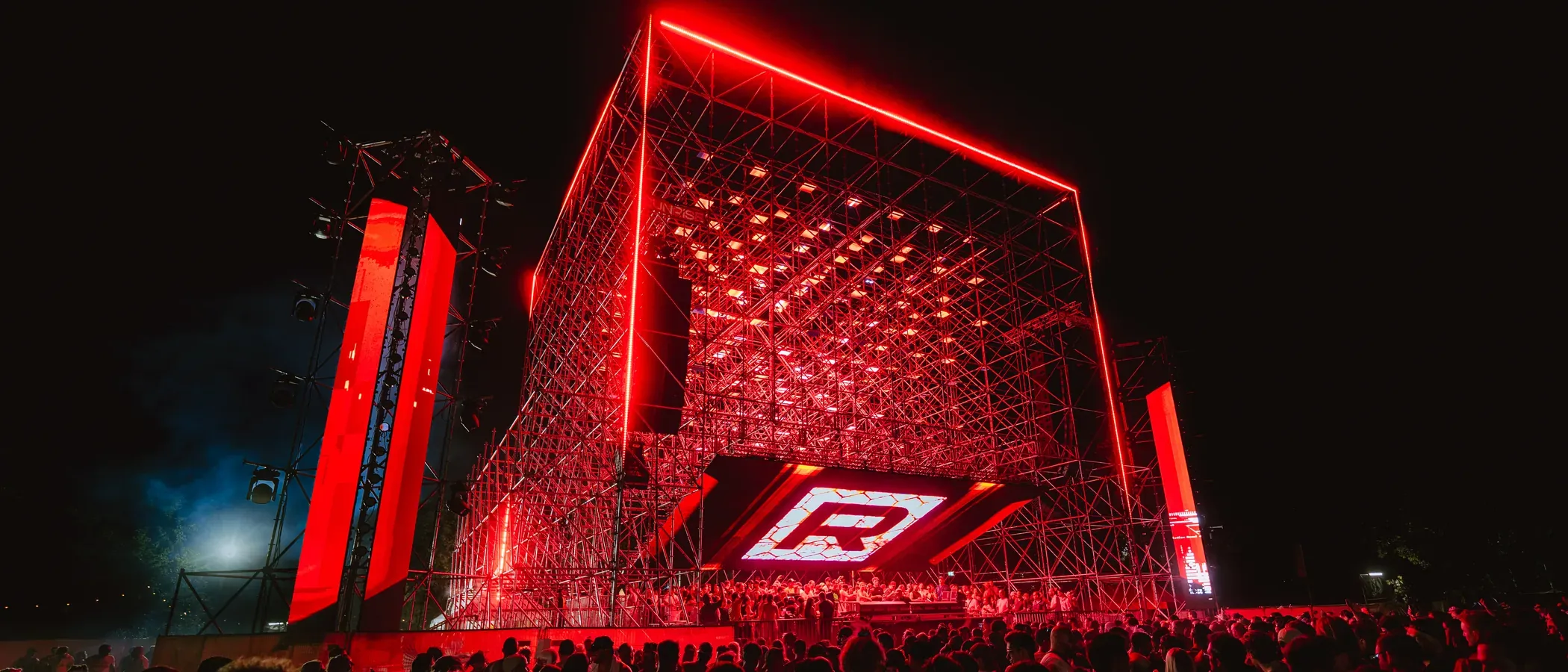
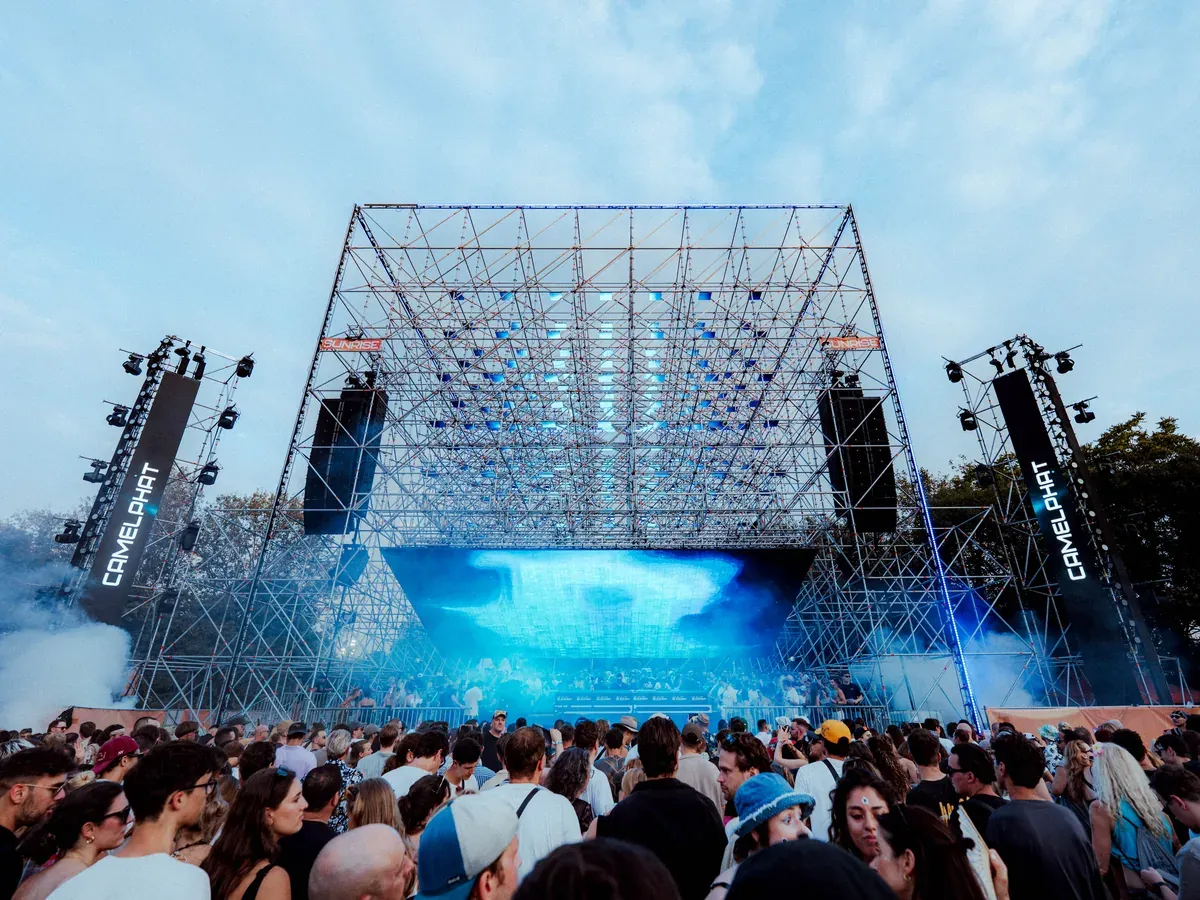
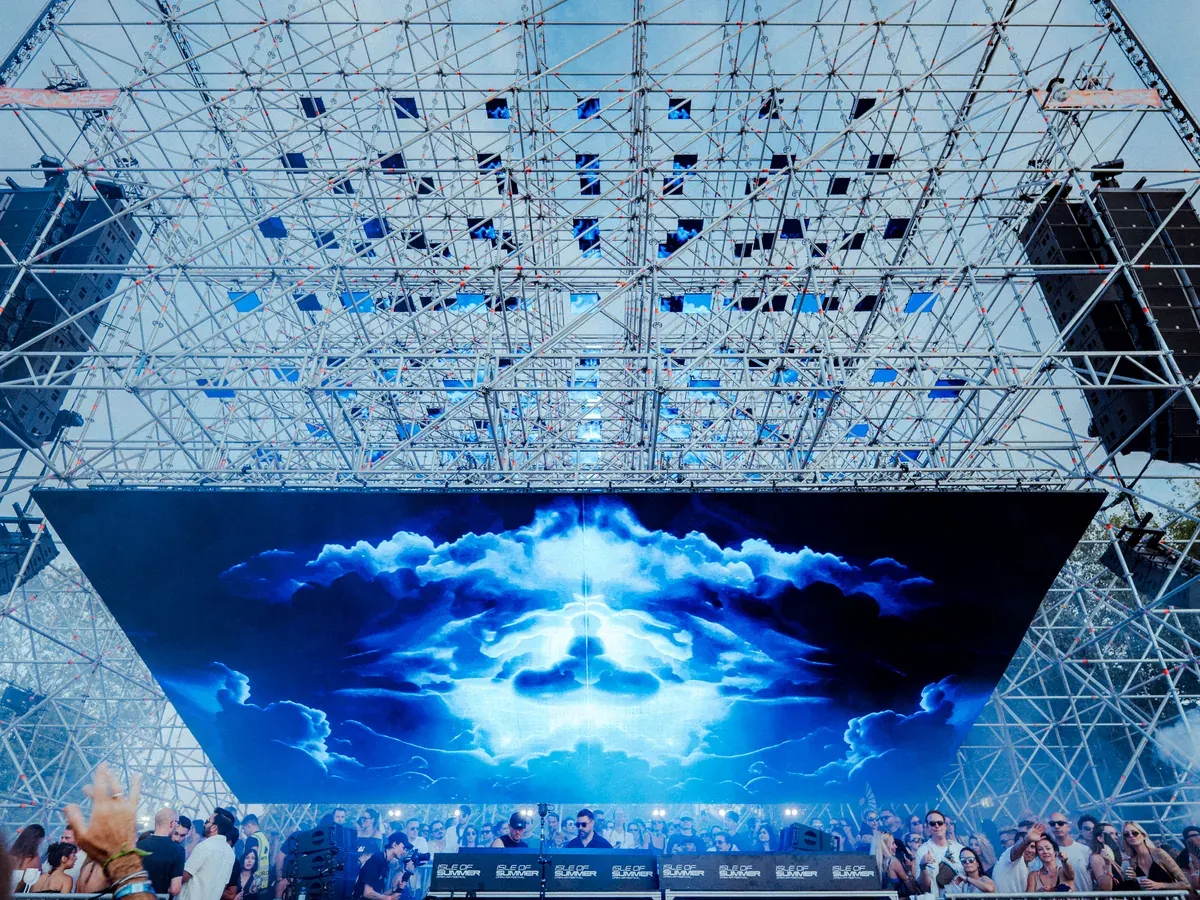
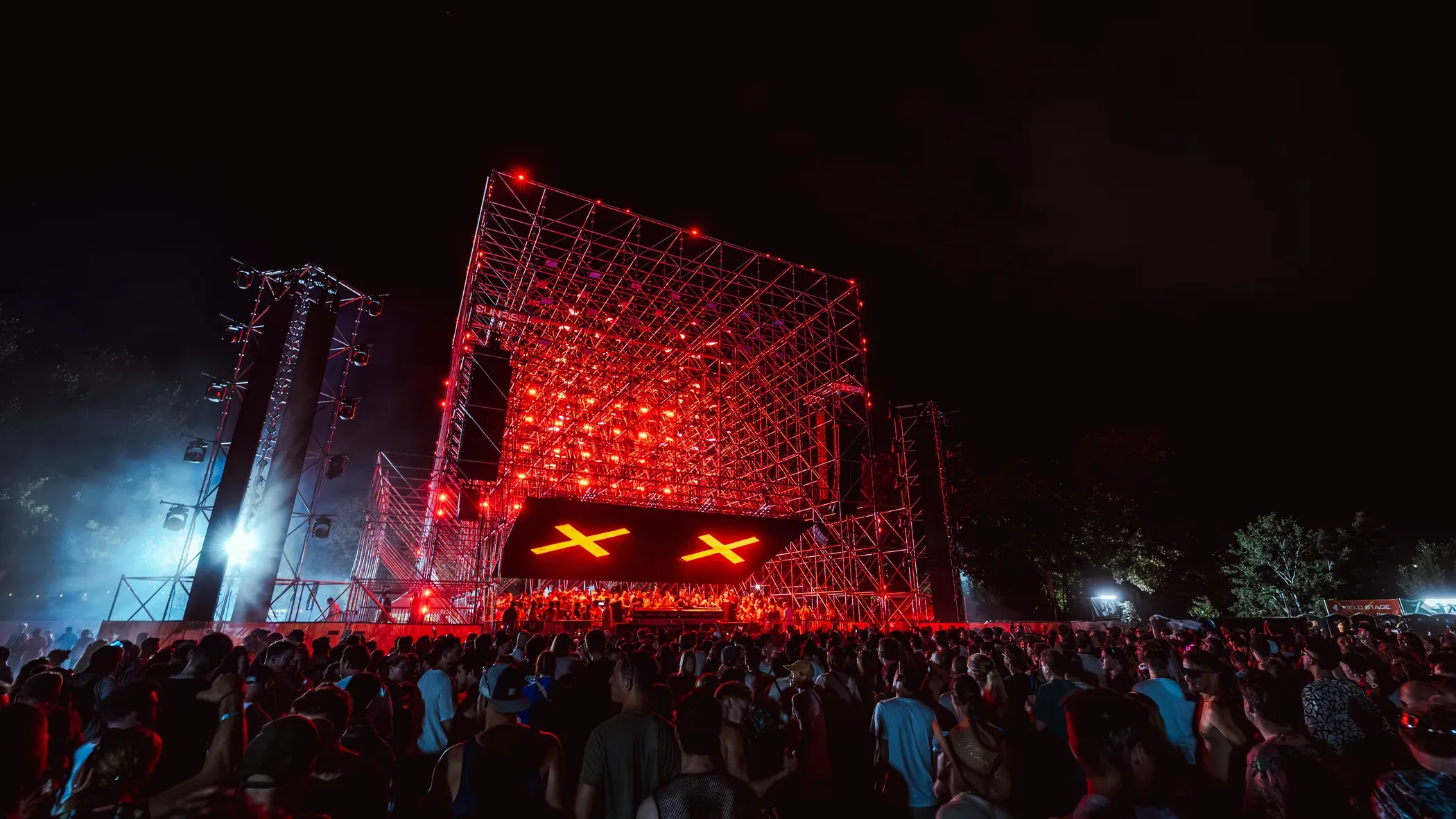
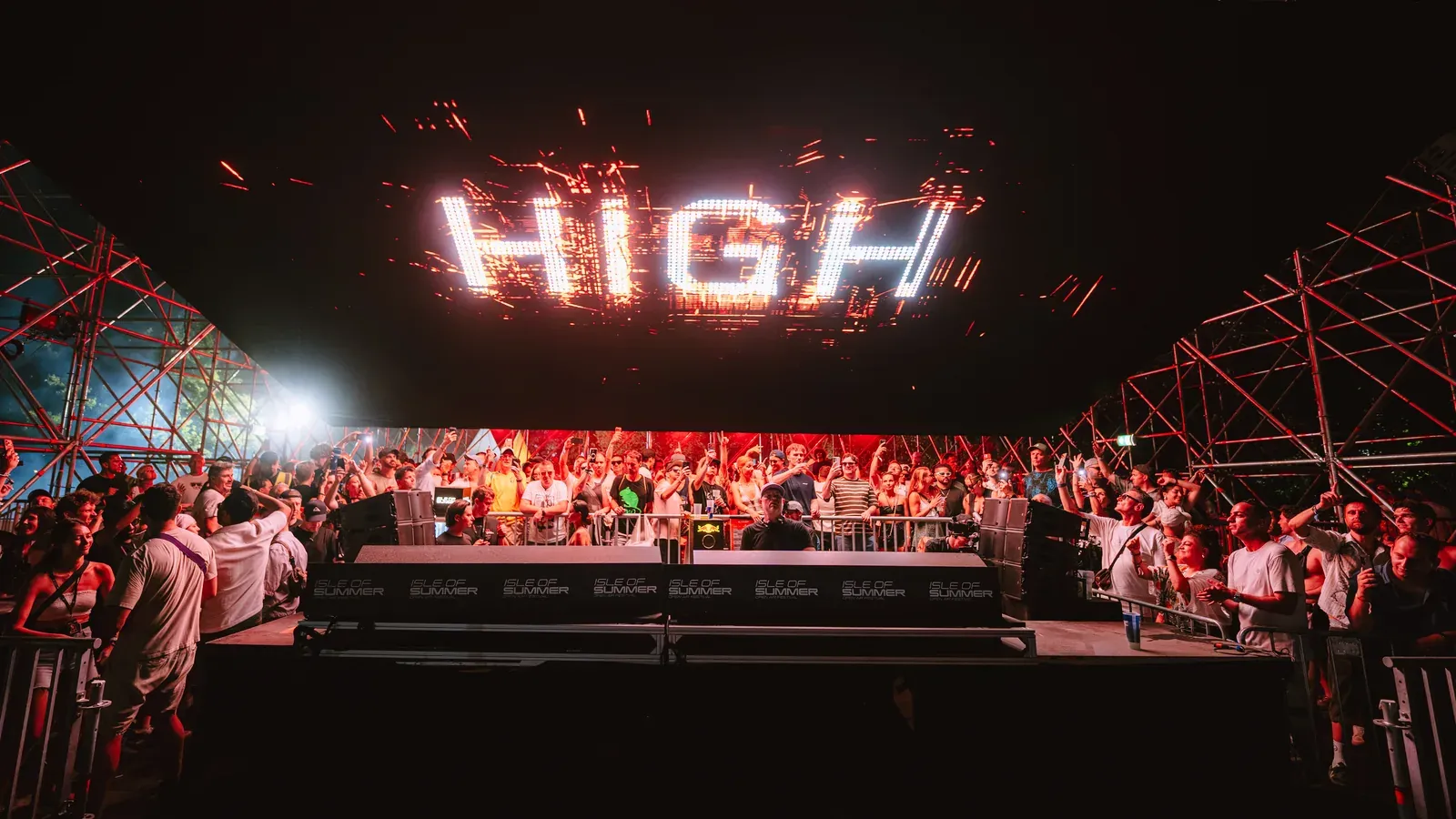
One system ran the whole stage.
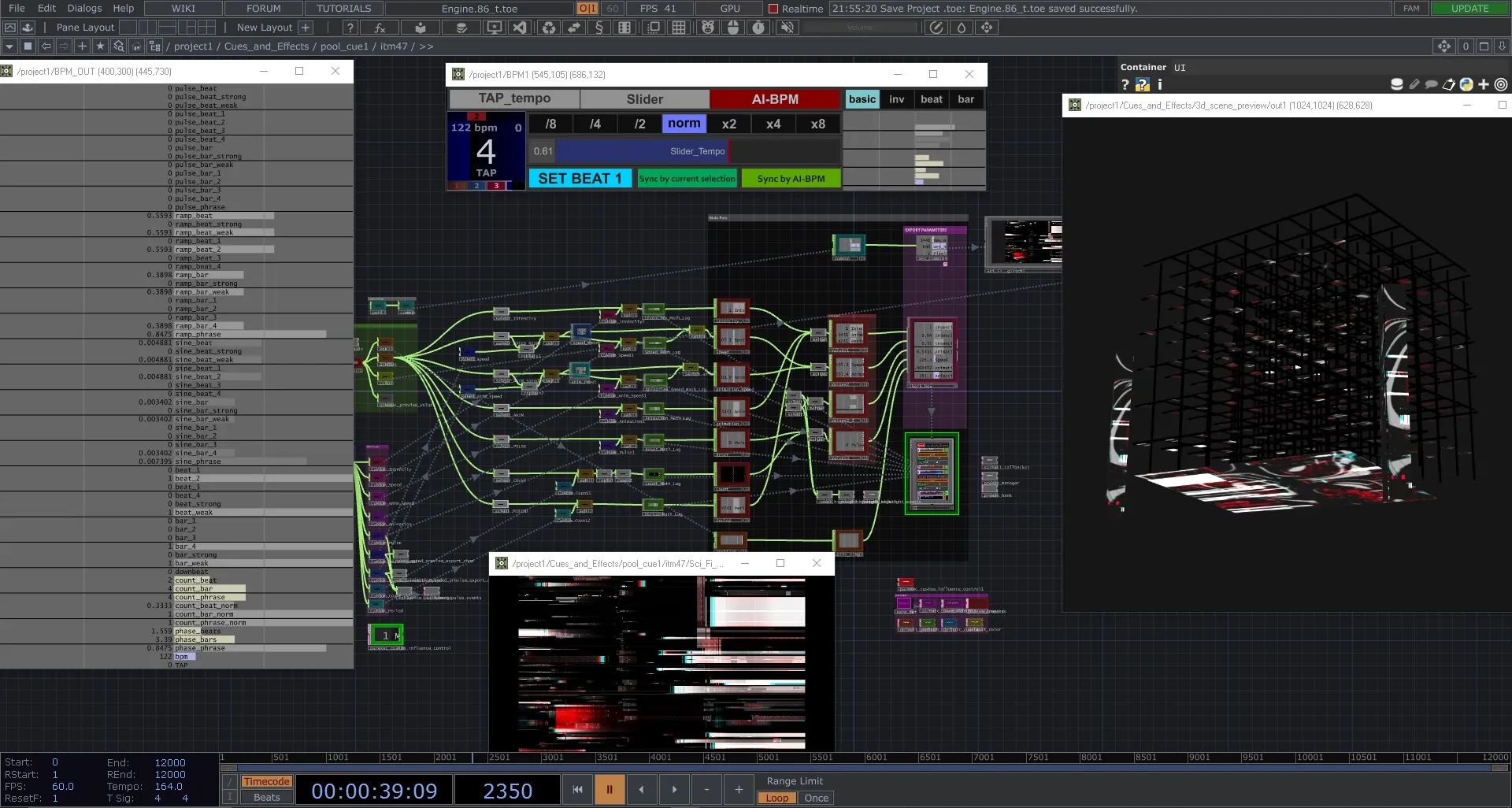
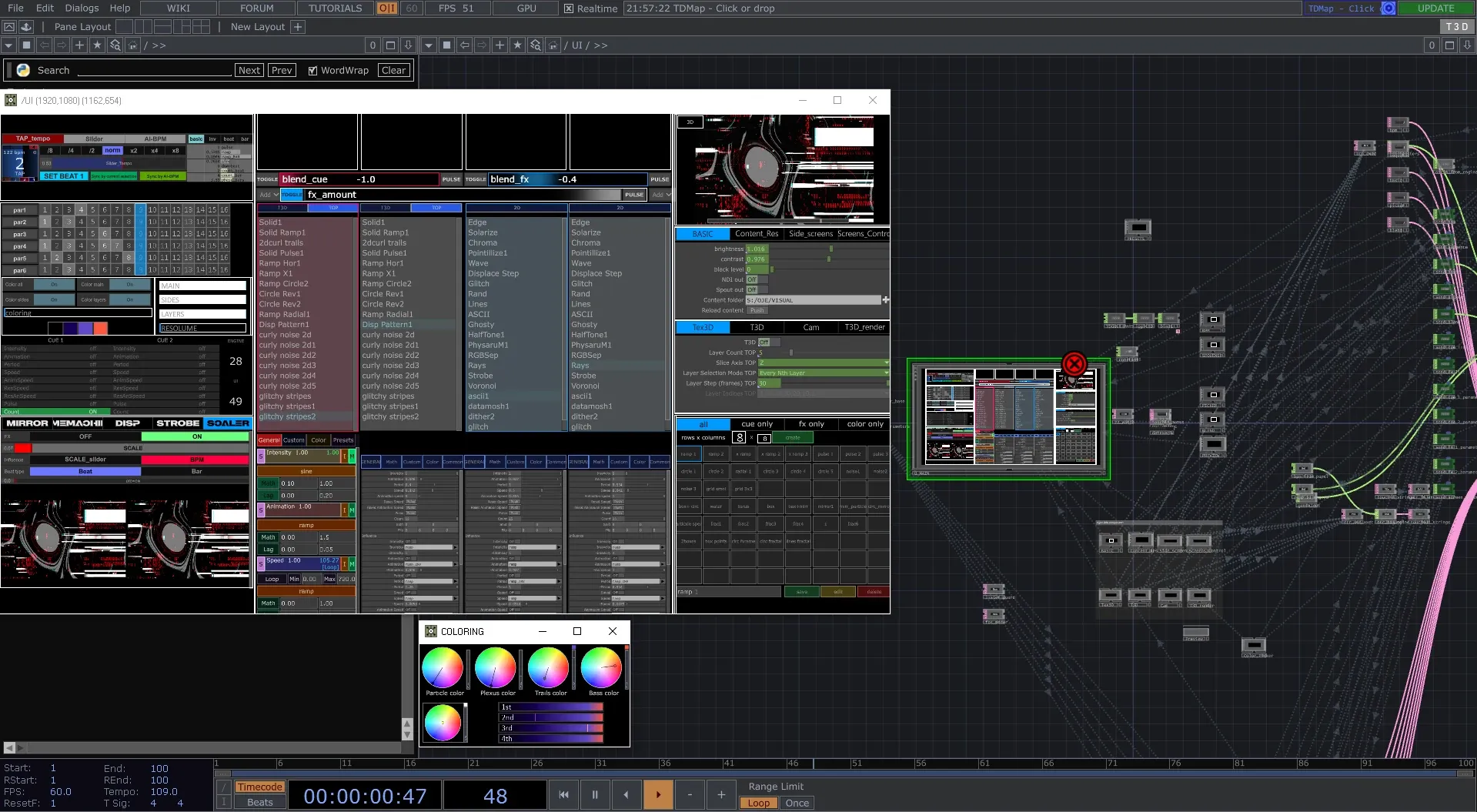
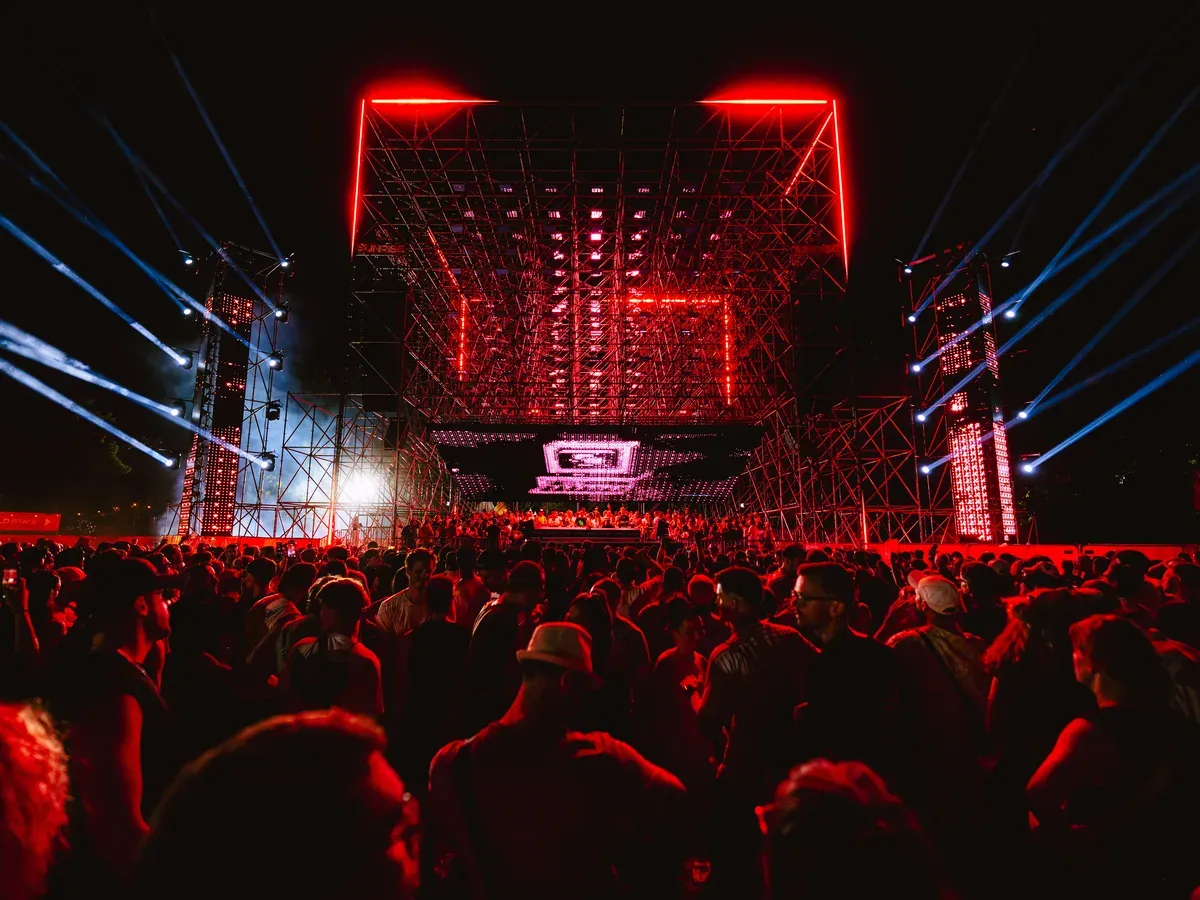
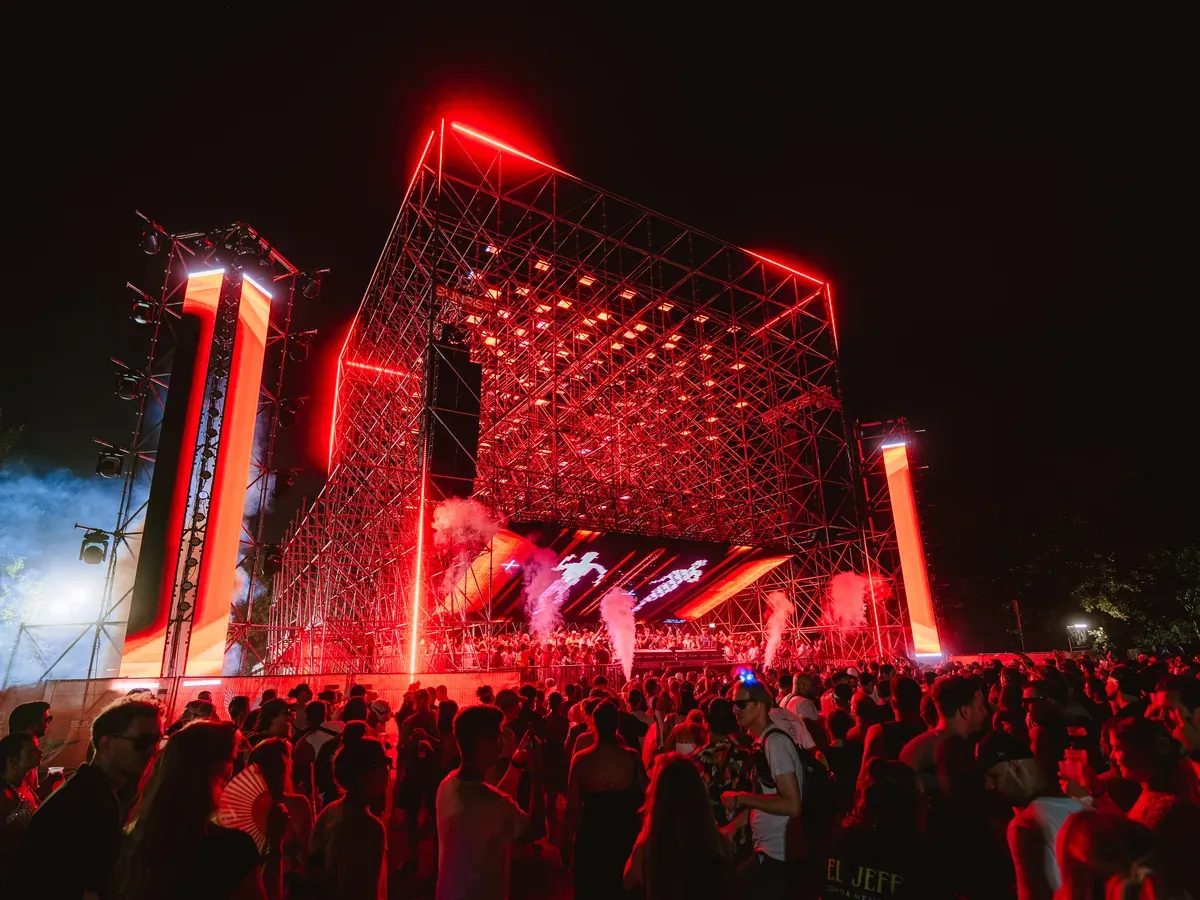
MØRPH, ØJE's own generative engine — eight years of continuous development behind it, rebuilt inside the studio into its current architecture: engine separated from UI, adaptive interface, performance tuned for live operation. It simultaneously drove the volumetric cube, the main screen and the tower screens while transmitting DMX to
grandMA3 for the strobes and LED tubes framing the structure.
The architecture is modular by design. New components load straight from disk: anything dropped into a designated directory is detected and integrated into both engine and UI automatically, so the system grows with new generators and tools without touching its core.
The stack combines 2D and 3D content generation, processing, FX and parameter control. Any surface can receive the same generation or run its own with independent processing; external feeds enter through capture input, routable to any display; and an incoming video stream can be converted into a volumetric data set by buffering sequential frames and sampling them along a spatial axis.
A beat-tracking module analyzes incoming audio and generates parameters mappable to any variable in the engine, with manual tempo input for live control. The same parameter space reaches the lighting rig: color values and behavioral parameters generated by the visual system went to grandMA3 over DMX for the tubes and strobes. The visual engine conducted the light.
MØRPH — operator interface and signal network